Find out what the chart measures
Body measurements describe the person. Finished-garment measurements describe the clothing. Do not compare your chest circumference directly with a chart entry that gives the shirt’s flat chest width. Doubling a flat width describes an approximate circumference only when the garment and measurement method make that appropriate; it is not an automatic size recommendation.
Keep centimetres and inches consistent. Then read where each measurement starts. Length taken from a shoulder point is not the same as length taken from the centre back. These are measurement-reading principles, not a universal Kakobuy size chart.
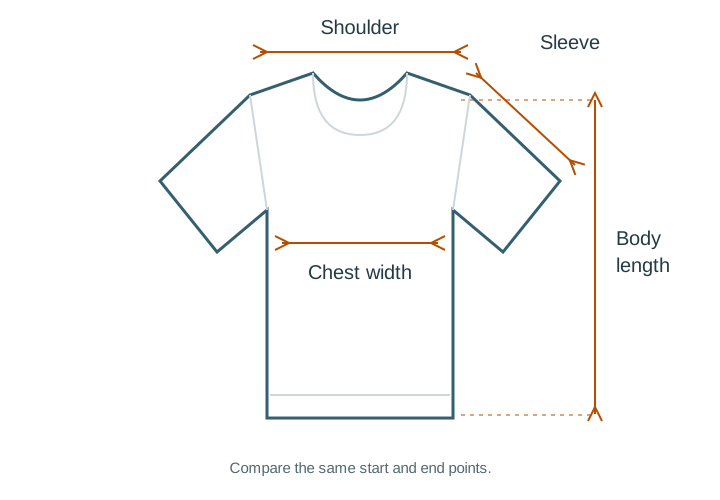
Width, length and sleeves work together
Chest width describes space across the torso. Body length determines where the hem sits. Shoulder width changes the position of the sleeve seam; sleeve length needs its own starting point.
For a roomier fit, compare all four fields with a similar garment. More chest room does not necessarily mean the hem and sleeves will stay the same length. “Oversized” describes an intended cut, not a fixed allowance shared by all sellers.
A dropped shoulder makes a sleeve measurement especially easy to misread. Use the chart’s seam or neckline reference rather than assuming every sleeve starts at the same place.
Three trouser measurements, three different questions
| Measurement | Read it as | Do not substitute |
|---|---|---|
| Waistband | Flat width or circumference, with relaxed or stretched state stated for elastic. | A stretched waistband for the relaxed measurement of another pair. |
| Rise | Distance from the crotch seam to the waist along the specified front or back route. | Outseam or overall trouser length. |
| Inseam | Length along the inside leg from the crotch seam to the hem. | Outside-leg length, which includes a different starting point. |
Compare a pair with a similar waist position and cut. Two pairs can have the same inseam but sit differently because their rise differs. For elastic waistbands, a single unexplained width leaves the relaxed fit unresolved.
A set needs two proportion checks
Read the top’s width and length separately from the trousers’ waistband and inseam. Then look at the available options: some listings sell a fixed-size set, while others let you select pieces separately. The outfit photo cannot establish which choice is available.
Put the actual offered combination into the Kakobuy order specification. Do not assume that a note requesting mixed sizes changes a fixed set into independently selectable pieces.
Ask for the dimension that is missing
Identify the item and labelled size, name the measurement, and state the endpoints. For a chest-width question, specify the flat garment width between the underarm points. For length, specify the starting point used in the seller’s chart. This produces a clearer question than asking whether the garment is “true to size”.
If you already have the item in an order, use My Orders to ask for the missing measurement or a clearer view. If warehouse photos are already available, decide whether a different view or measurement would answer it. A visible size label confirms what the label says, not how the item will fit your body.